Sep 04, 2026
When a burst water main, a flood or a power failure cuts off the supply, the outcome is decided by one number: how much water was already in storage. Public health guidance, including CDC recommendations, starts at one gallon (about four liters) per person per day for drinking and basic hygiene, and serious preparedness planning raises that to roughly 14 gallons per person for a two-week disruption. A household can manage that with stacked containers. An apartment complex, a school, a clinic, a factory or a building's fire-protection system cannot — at that scale you need dedicated emergency water storage tanks measured in thousands of gallons, already full before the emergency starts.
The conclusion first: once your reserve requirement climbs past roughly 1,000 gallons (about 3.8 cubic meters), a modular bolted sectional tank is the most practical option. Panels ship flat, pass through ordinary doorways, bolt together on site without welding permits or cranes, and can be enlarged later by adding more panels. What follows is a working guide to sizing, material selection, placement, water quality and the purchasing checks that keep an emergency reserve from turning into a maintenance liability.
Size the tank for the longest outage you can realistically expect, not the mildest one. Three scenarios cover most projects:
A modular tank makes this arithmetic less painful because it scales in panel increments. You can install the capacity your budget allows this year and bolt on additional panels when the risk assessment changes — something a welded structure or a concrete cistern cannot offer without major rework.
Panel material decides how long the tank lasts, how clean the water stays and what you pay. The differences matter more in an emergency than in everyday service, because a tank that sits full for months exposes every weakness in the wrong coating or gasket.
| Material | Best suited for | Main strength | Points to watch |
|---|---|---|---|
| 304 stainless steel | Drinking water and food-grade reserves | Hygienic surface, long service life | Highest upfront cost of the standard options |
| 316 stainless steel | Coastal sites and chemically aggressive water | Superior corrosion resistance | Premium price; unnecessary for most inland sites |
| Hot-dip galvanized steel | Fire reserves and budget-driven projects | Economical, strong, quick to manufacture | Coating life depends on water temperature and quality |
| Fiberglass (GRP/FRP) | Corrosive water and lightweight retrofits | Will not rust, low maintenance | Needs protection from impact and prolonged sun exposure |
| BDF composite panels | Buried and semi-buried tanks | Galvanized shell outside, stainless contact surface inside | Requires proper waterproofing and anti-floating design |
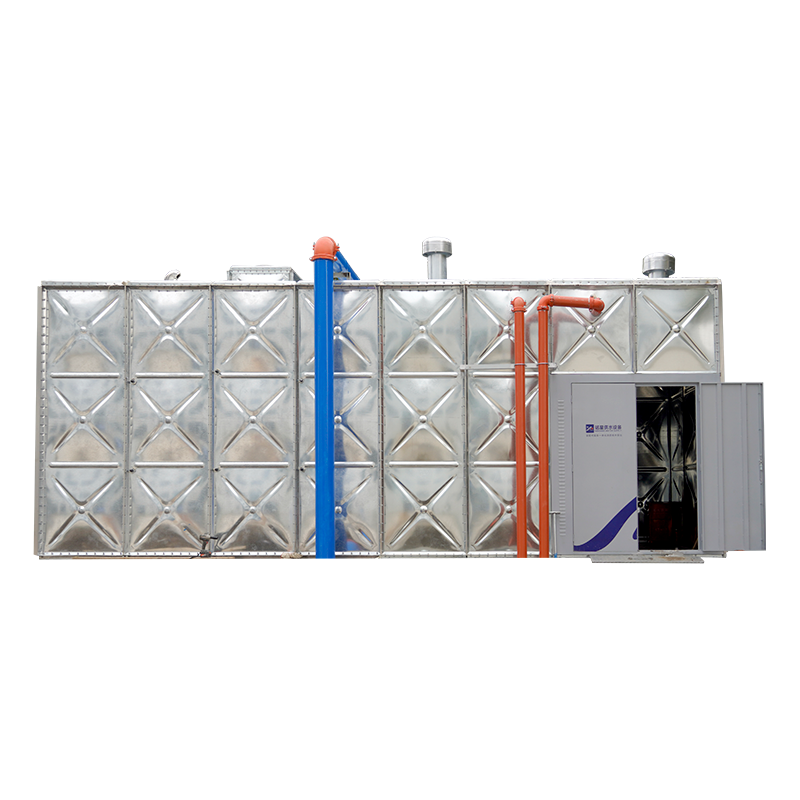
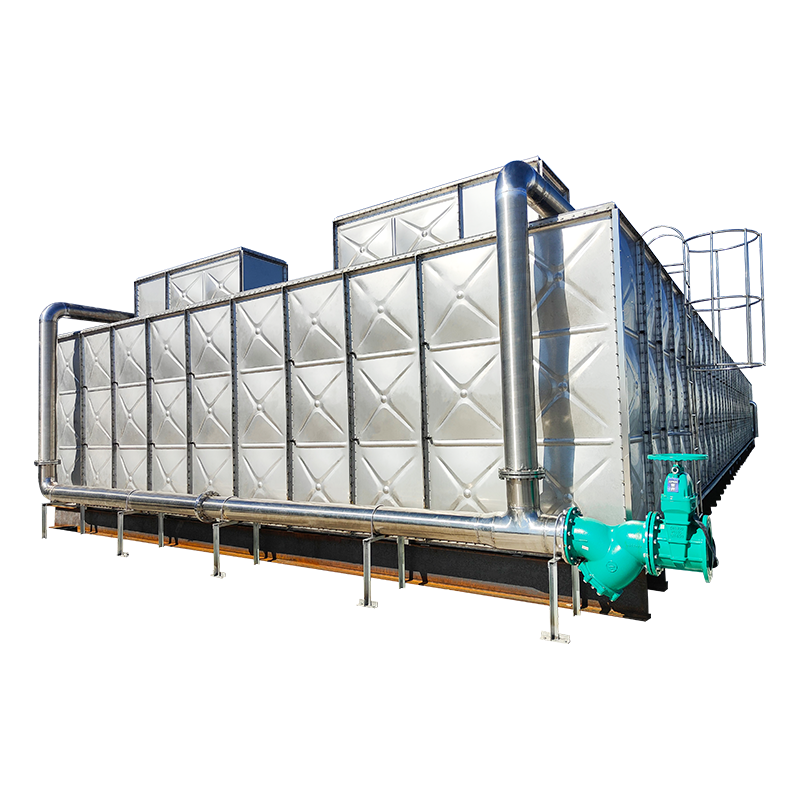
For drinking-water reserves, 304 stainless steel is the default choice because the contact surface is food-grade and easy to disinfect; sites near the sea or handling aggressive water justify moving up to 316. For fire reserves and cost-sensitive projects, hot-dip galvanized panels deliver comparable structural strength at a friendlier price. Two widely used examples illustrate the range:
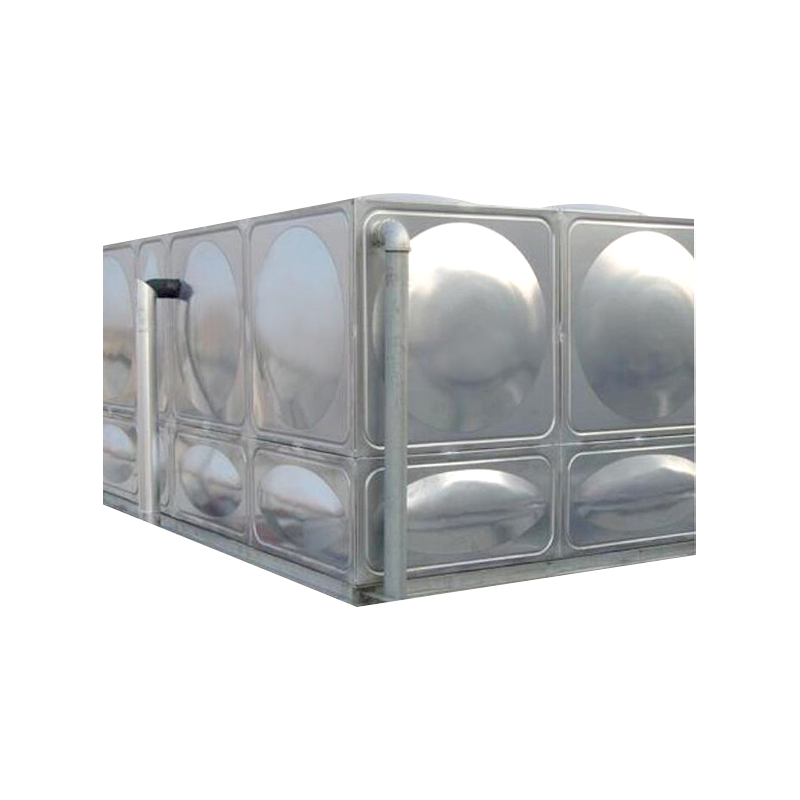
 304 Stainless Steel Bolted Sectional Water Tank With seamless one-piece molded modules and food-grade SUS304 contact surfaces, this bolted panel tank suits drinking-water reserves, matching the discussion of stainless steel for potable storage. View Product →
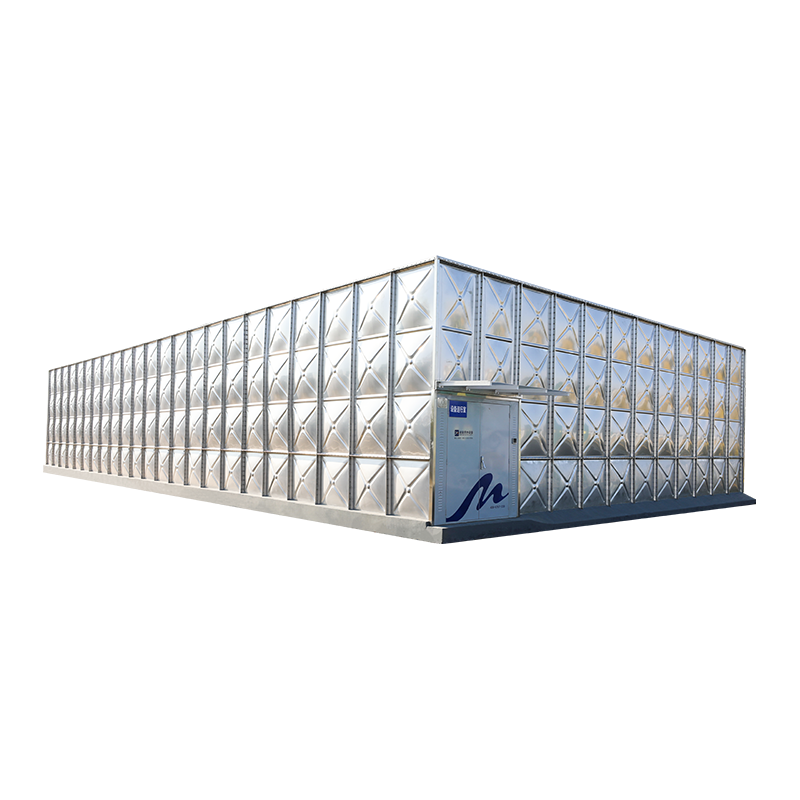
 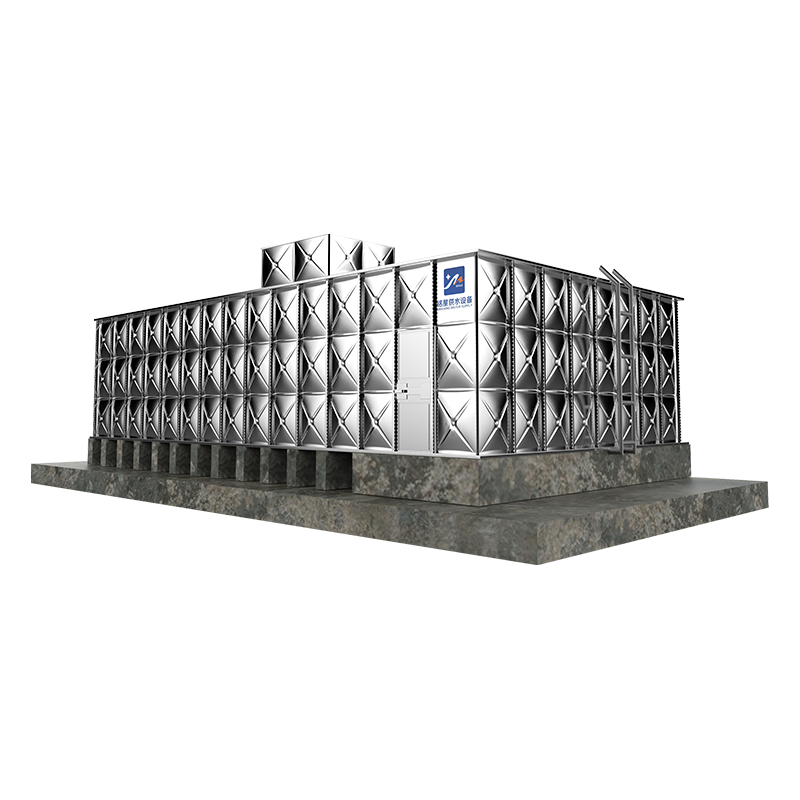 Hot-Dip Galvanized Bolted Sectional Water Tank Assembled from weld-free hot-dip galvanized panels, this tank offers comparable structural strength at lower cost, aligning with the surrounding notes on fire reserves and budget-sensitive projects. View Product →
 Both are assembled panel by panel on site, which means delivery trucks only need to reach the building, not a crane route to the roof. If the stored water is meant for drinking, confirm that every panel, gasket and sealant carries a potable-water certificate before the order is placed; it is far easier to check paperwork now than to drain and replace a tank later.
Water is heavy. One cubic meter weighs one metric ton, so a modest 20-cubic-meter tank puts more than 20 tons on the structure once the panels themselves are counted. Ground floors and basements are the natural homes; roof installations need a structural engineer's confirmation of live-load capacity first. The compensation for that constraint is access: because bolted panels are small and light, they fit through standard doorways and stairwells and assemble exactly where the tank will stand. No crane, no demolished wall, no hot-work permit in an occupied building.
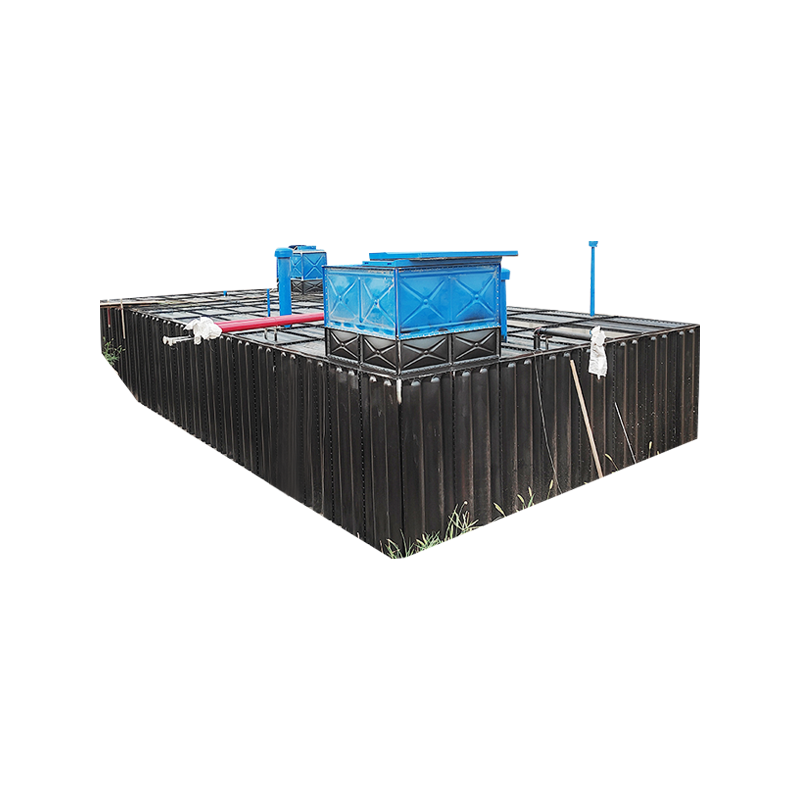
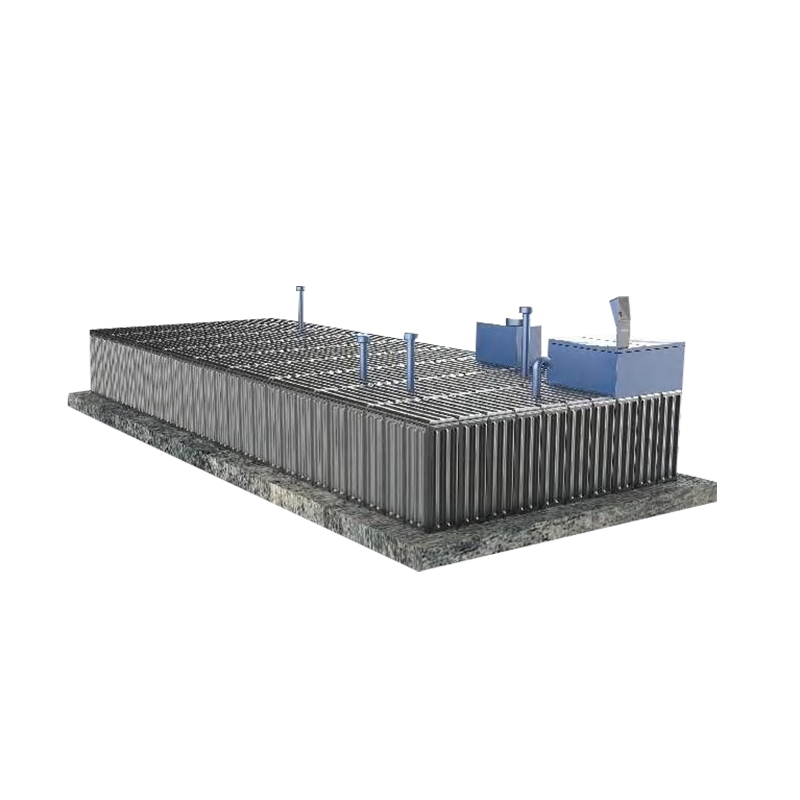
Where ground space is scarce — dense urban plots, hospital campuses, logistics hubs — burying the reserve frees the surface entirely and protects the water from frost, heat and tampering. Buried tanks demand two extra engineering checks: waterproofing against groundwater ingress, and an anti-floating design so that an empty tank in saturated soil does not lift. BDF panels were developed for exactly this compromise, pairing a galvanized steel shell with a stainless inner surface:
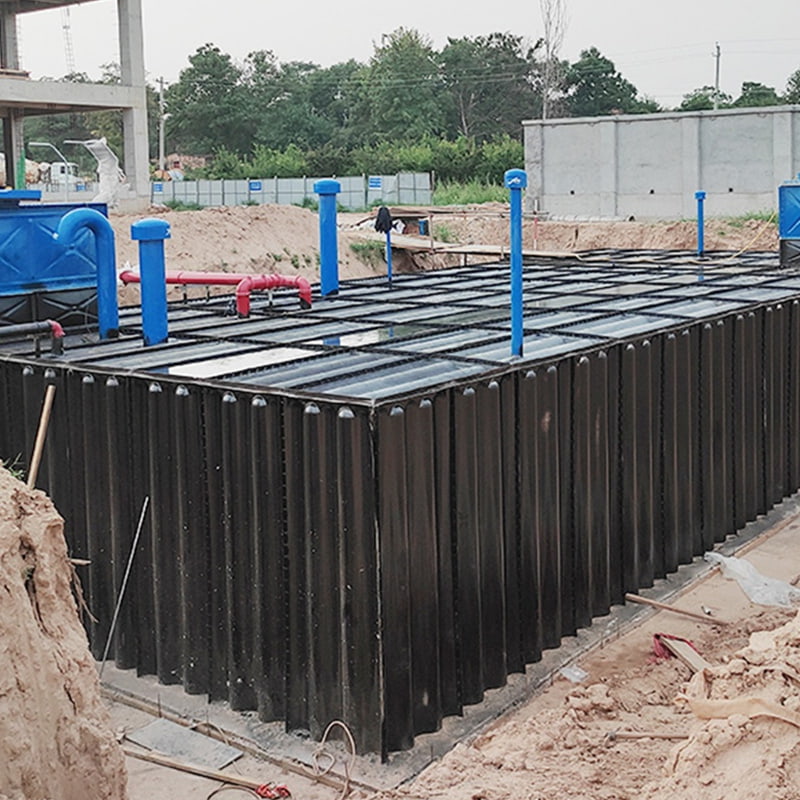 BDF Semi-Buried Fire Water Tank Pairing a galvanized shell with a stainless inner surface, this semi-buried tank keeps access above grade while freeing ground space, fitting the buried-storage scenarios described here. View Product →
 Semi-buried variants keep the access hatch above grade for inspection while hiding most of the body below ground — a common pattern for fire reserves that must stay serviceable yet out of the way.
Stored water degrades quietly. The fixes are inexpensive if designed in from the start: a sealed panel interior, a screened and lockable vent, a manway for entry, and a drain sump deep enough to flush sediment. Disinfect the tank before the first fill, then refresh self-stored drinking water every six months and label the fill date on the shell so the rotation actually happens. Fire reserves follow a different rhythm: they stay full permanently and prove themselves through routine pump and flow tests, which is why an inspection hatch and clean interior surfaces matter even for water nobody drinks. Schedule an annual internal check of gaskets, bolts and coatings; a half-day inspection each year is what keeps a ten-year-old tank as trustworthy as a new one.
The most expensive emergency tank is the one that has to be replaced. Most field failures trace back to the same handful of decisions, so work through this list before committing:
Lead time is the quiet risk. Demand for storage equipment spikes after every major flood or drought, and a tank ordered during the emergency arrives after it ends. Manufacturers who press and weld their own panels, and who provide installation supervision, can shorten that window considerably; our guide on how to quickly deploy and install water storage equipment walks through what a fast-track installation looks like in practice.
An emergency water storage tank rewards the same habit as insurance: it is arranged calmly, before it is needed. Decide the capacity, pick the material that matches your water and your site, reserve the space and the structural capacity, and put the maintenance rhythm on a calendar. If you are weighing those choices now, describe your building, occupant load and the outage you are planning for, and request sizing drawings and a quotation through our contact page — the tank sized and installed this month is the one that will be full when the main breaks.
Membagikan:
Produk Terkait
Hubungi kami
Alamat Kantor Pusat
Kamar A06, Lantai 4, Bangunan 6, Jalur 4369, Jalan Yinggang Timur, Distrik Qingpu, Shanghai, Cina
Alamat Pabrik
1, Mingxing North Road, Tech Innovation Park, Jianhu County, Yancheng, Jiangsu, P. R. China
Surel
tony@mxwatersupply.com
Ada@mxwatersupply.com
Telepon Whatsapp Whatsapp / WeChat)
+86-18051685983
KODE QR